AI doesn't replace filmmaking.
It expands what stories
can become through concept,
storytelling, and
art direction.
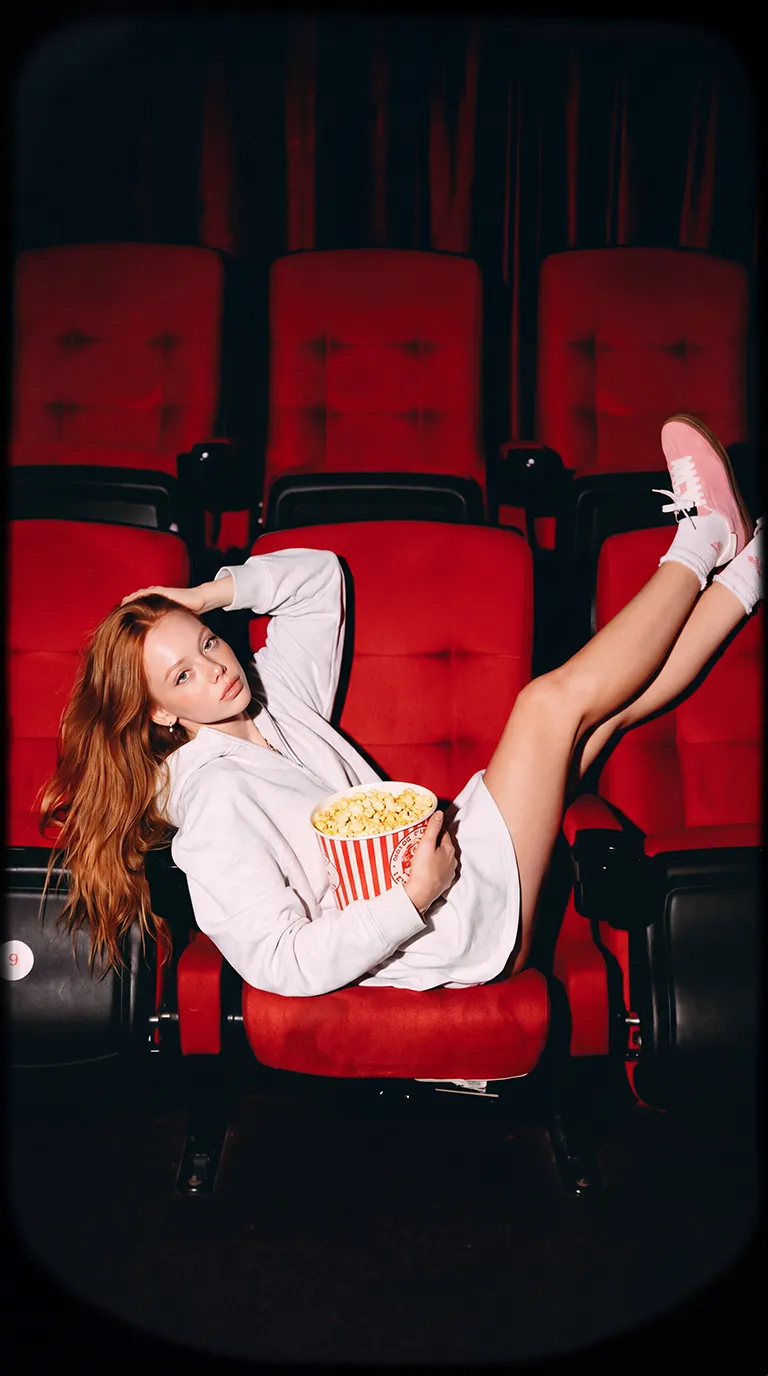
We develop AI cinema as an ongoing production, not a collection of disconnected clips. Scripts, character arcs, locations, wardrobe, and visual language are built to hold together across scenes, episodes, and seasons.
The same characters return across different locations, emotional states, costumes, and storylines. Face, body, wardrobe, and physical state are maintained shot by shot so the audience can follow the story without being pulled out of the film.
Every scene begins with the traditional filmmaking process: script, storyboard, shot list, blocking, lens choice, lighting, and performance intent. AI generates the frames, but direction determines what each frame needs to accomplish.
Generated footage is shaped into a finished sequence through editing, pacing, sound design, music, and color grade. The goal is not an impressive AI clip. It is a coherent scene that can live inside a film, series, or professional production pipeline.
Traditional filmmaking captures performances, locations, lighting, and camera movement as pixels. AI filmmaking generates those pixels instead. The source has changed. The need for intentional direction, visual continuity, and editorial control has not.
We do not treat AI video as a sequence of prompts. We work from the same foundations that have always shaped cinema: concept, script, character development, art direction, locations, storyboards, shot lists, blocking, lens choices, lighting, editing, sound, and color grade.
Filmatix understands both sides of the transition: how films have traditionally been made and how generative tools are changing the production pipeline. We bring practical AI production experience, visual judgment, and filmmaking discipline to teams exploring what cinema becomes next.
The Mia Show is a serialized drama about three women in New York, dating, friendship, ambition, and arguments they never quite settle. It's also a record of how fast the tools that make it are changing.
Season 1 was made with what existed in its year. So was Season 2. So is Season 3. Nothing has been retrofitted, nothing regraded to match, nothing quietly fixed once better models arrived. Watch them in order and you see two things at once: the same three women getting older and harder to please, and the medium itself resolving, hands settling, faces holding across a cut, a room staying the same room from one shot to the next. The slop that was unavoidable in Season 1 is rare by Season 3. Most work in this space is built to hide that. We're keeping it as the timestamp.
The endpoint is defined. At some point a season will arrive where nothing on screen separates it from footage shot on a camera. That's graduation day and everything before it becomes the record of what it took to get there.
AI does not make the film on its own. At Filmatix.AI, every scene is developed through script, shot list, visual references, character consistency, and cinematic direction. We use AI as a production engine, but the story, pacing, emotion, and final cut are human-directed.
Season 03 · 100% AI
Season 02 · 100% AI
Project type, technical problem, deliverable, timeline. We define what success looks like before generation begins.
Treatment, storyboard, shot list, character design. Every frame designed before it's built.
Shot-by-shot generation with full continuity control. Character identity locked, state preserved across cuts, lighting matched between scenes.
Edit, color grade, sound design, master delivery. Hand-finished frames. Studio-spec exports.
We've built a production workflow where a multi-shot sequence preserves character identity, wardrobe state, and physical continuity across cuts. We've tested it on the Mia series, a serialized AI drama with recurring characters that we use as our internal R&D environment. Every workflow we offer was tested there first.
We work as embedded creative and technical talent, not as a vendor pitching deliverables. Short pilots, contained scopes, transferable findings. Available under NDA. Tooling stack disclosed on request. Models used are commercially licensed. Outputs delivered with full rights transfer.
A 30-minute call. We discuss your project, your technical problem, or your team's AI roadmap, and show you exactly what our pipeline can do.
We respond within 24 hours.